

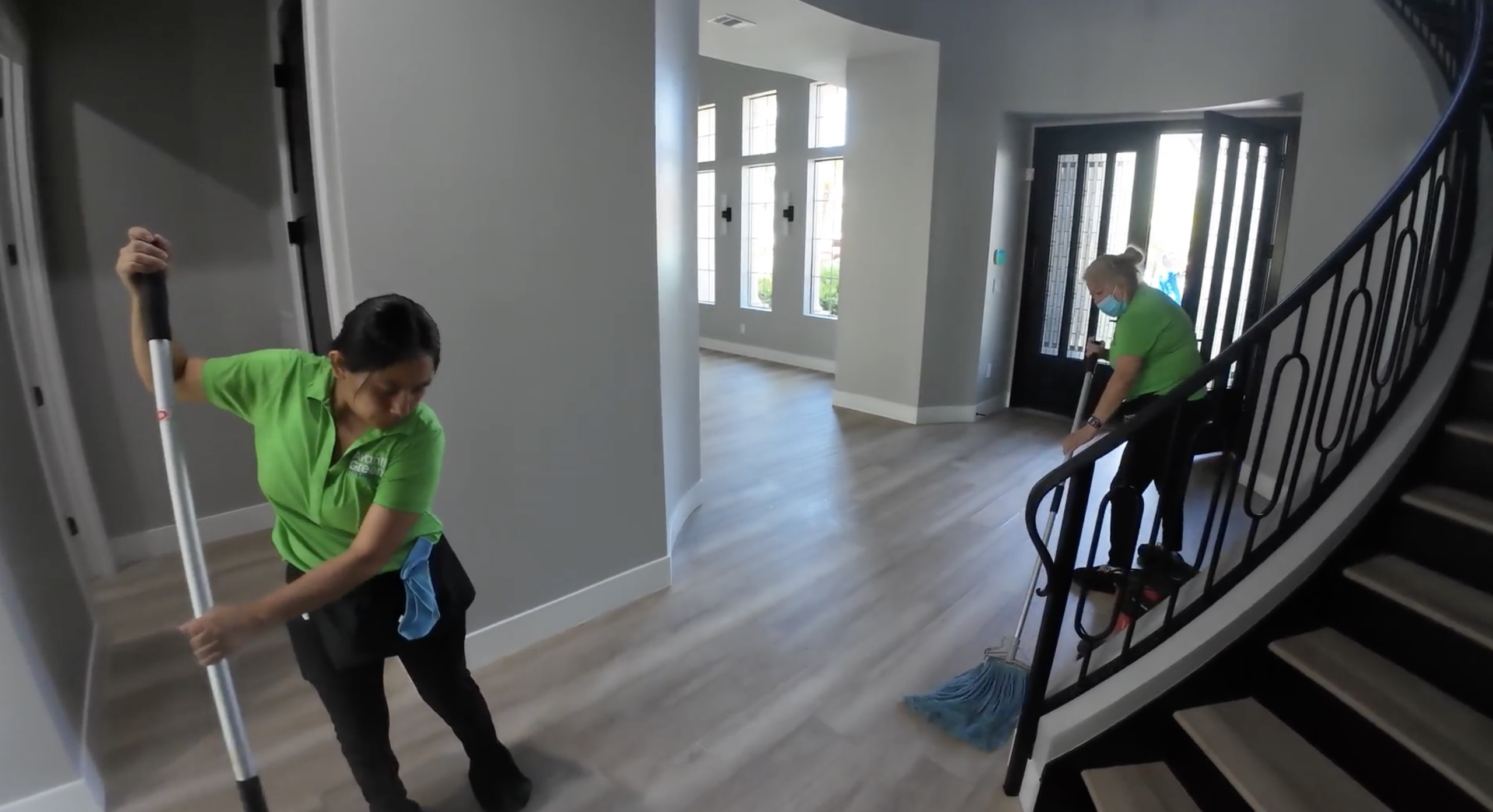
Move-Out Cleaning Checklist Las Vegas Landlords Expect (Room-by-Room)
TL;DR. A Las Vegas move-out cleaning checklist should cover every room to inspection standard, because Nevada law (NRS 118A.242) only allows landlords to deduct for damage beyond normal wear and tear, not for a clean that looks good but misses the oven interior, refrigerator shelves, or hard-water scale on bathroom fixtures. The most common deduction categories are kitchen appliances, carpets, and bathroom surfaces with mineral buildup. Landlords must return the remaining deposit with an itemized accounting within 30 days. Photograph every room after cleaning; those photos are your best protection if any deduction shows up on that accounting.
Getting the full deposit back isn’t complicated, but it does require treating the move-out clean as an inspection-grade scope rather than a routine tidy-up. Whether you’re doing the work yourself or briefing a professional cleaner, this room-by-room checklist covers what Las Vegas landlords and property managers actually inspect on a walkthrough.
Contents
- 1 Why your move-out clean decides your deposit
- 2 Nevada wear and tear vs. damage: what landlords can legally charge you for
- 3 Kitchen: where most deductions happen
- 4 Bathrooms: hard water, grout, and the under-rim test
- 5 Bedrooms, living areas, and closets
- 6 Floors and carpets
- 7 Windows, blinds, and slider tracks
- 8 HVAC vents, baseboards, and the Las Vegas dust problem
- 9 Garage, patio, and exterior touchpoints
- 10 DIY vs. hiring a move-out cleaner
- 11 The 24-hour pre-handover walkthrough
Why your move-out clean decides your deposit
The security deposit is the most money you can recover or lose in a single afternoon, and the move-out clean is the biggest variable that determines which way it goes. A four-figure deduction for cleaning alone is not unusual in Las Vegas. Most of it traces back to surfaces the tenant didn’t know were on the inspection list.
Most tenants clean to the standard of “looks fine to me.” Las Vegas landlords and property managers inspect to turnover standards, which means they’re opening every cabinet, running a finger along every baseboard, and checking the oven interior and refrigerator drawers before they sign off. A clean that would pass your own eye won’t necessarily pass a walkthrough built around that checklist.
The same checklist works whether you’re doing it yourself or handing it to a professional. Avanti Green handles move-out cleans for Las Vegas and Henderson residents who want the scope done to inspection standard; see our move-in/move-out cleaning service for details. But first: the legal context that determines what a landlord can actually charge you for.
Nevada wear and tear vs. damage: what landlords can legally charge you for
Nevada Revised Statutes 118A.242 limits what a landlord can take from a security deposit to three categories: unpaid rent, damage beyond normal wear and tear, and reasonable cleaning costs to restore the unit to its move-in condition. That third category is where most move-out disputes live.
Normal wear and tear has a plain-language definition. Minor carpet matting in traffic lanes where people walk every day is normal wear. Small nail holes from picture hanging are normal wear. Paint that has faded or yellowed after years of sun exposure is normal wear. None of those are deductible. What is deductible: pet stains that soaked through the carpet pad, holes in the wall large enough to require a drywall patch, or baked-on grease in the oven that wasn’t there when you moved in.
The statute also puts a clock on the process. Nevada landlords must provide an itemized written accounting of any deductions and return the remaining balance within 30 days of the tenancy ending. Not 30 days from when they get around to it. Thirty days from when the tenancy ends.
Your protection in any dispute is documentation. Before you hand over the keys, photograph every room, every appliance interior, every surface you’ve cleaned. Turn the camera timestamp on. Those photos are what wins a deposit dispute if an unexpected deduction shows up in the accounting.
Kitchen: where most deductions happen
The kitchen generates more deductions than any other room, and most of them are preventable with the right sequence and enough time.
Start with the oven. Baked-on grease and burnt drips are the single most common kitchen deduction in Las Vegas. Dry scrubbing won’t clear them. Apply a degreaser, let it soak for at least 30 minutes, then wipe. For heavily soiled interiors, a second application is faster than more scrubbing. Don’t forget the oven door glass, the racks (pull them out and wash separately), and the drawer under the oven where crumbs and grease drips collect. Most tenants forget that drawer entirely.
The refrigerator gets the same thorough treatment. Empty it completely, pull every drawer and shelf and wash them separately, then wipe the interior walls and door gaskets. Check the top of the fridge, too. Dust collects there over a tenancy and it’s a visible flag on a walkthrough.
Cabinet interiors and exteriors both get inspected. Landlords open every door. Crumbs, sticky shelf liner residue, and grease buildup above the stove are each their own line item on an itemized deduction. Wipe the inside faces, the shelves, and the exterior surfaces including the area above the stove where cooking spray and grease vapor settle.
Work through the range hood filter, the microwave interior (splattered food won’t clear with a damp cloth alone; use a degreaser), and the dishwasher. Run a cleaning cycle first, then wipe the door gasket and check the filter at the bottom.
Countertops, the backsplash and its grout lines, the sink basin, the faucet, and the disposal all need attention. Pay close attention to the silicone seal around the sink and any food debris caught at the rim where the sink meets the counter.
Before you finish the kitchen, pull the stove and refrigerator away from the wall and clean the floor and wall behind each one. This is one of the first things a property manager checks on a walkthrough. The grime that builds up behind a stove over years of cooking is a reliable signal of how thoroughly a tenant cleaned.
Bathrooms: hard water, grout, and the under-rim test
Las Vegas tap water is among the hardest in the country. Calcium and mineral scale builds up on every fixture: showerheads, faucets, toilet bases, glass doors. It builds up faster than most tenants realize, and after months of normal use, a standard bathroom spray won’t clear it. This catches out-of-state renters off guard more than any other cleaning issue in this market.
The shower and tub need methodical attention. Work through the glass doors, tile and grout lines, showerhead and fixtures, and the drain cover. Grout darkening from mildew is one of the surfaces landlords most frequently flag. If grout has gone gray or black, it needs more than a surface wipe.
The toilet gets cleaned inside and out, including the under-rim. Property managers check the under-rim on most walkthroughs because it’s the surface tenants most consistently skip on a standard clean. Also clean the floor behind and around the base of the toilet and the floor flange where dust and hair collect.
Work through the vanity, sink, faucet, mirror, and medicine cabinet including the interior and the back of the mirror housing. Clear hair from the drain before you finish.
Three spots most tenants miss: the exhaust fan cover (vacuum or wipe the dust from the louvers), any light fixture above the vanity (wipe the globe and the mounting hardware), and the floor strip behind the toilet between the toilet and the wall.
For hard-water scale specifically, Avanti Green removes mineral buildup with Envirox Mineral Shock and a 0000 steel wool pad. That combination clears calcium deposits from chrome fixtures and glass without scratching the surface, which is the concern with abrasive pads on delicate finishes.
Bedrooms, living areas, and closets
These rooms carry lower deduction risk than the kitchen and bathrooms, but they’re not zero-risk, and the surfaces that get flagged are usually the ones tenants don’t think to look at.
Work top to bottom, always. Clean ceiling fans and light fixtures first, then walls and switch plates, then flat surfaces, then floors. If you clean the floors first and then knock dust from a ceiling fan, you’re mopping twice.
Ceiling fans and light fixtures accumulate dust and cobwebs over a tenancy. A property manager looking up at a ceiling fan for two seconds will spot a dust buildup that you’ve stopped noticing because it happened gradually. Wipe each blade, and wipe the fixture housing.
On walls, the standard is wiping any visible scuff marks or fingerprints. Small nail holes from a picture or two are normal wear; larger holes that require a drywall patch are not, and disclosing them before the walkthrough is better than having the landlord call them out. Door frames and the tops of doors collect dust and are quick to wipe.
Closets get dusty during a move. After pulling out boxes and bins, sweep or vacuum the closet floor, wipe the shelves, and wipe the rods.
For windows from the inside, clean the glass, wipe the sills and frames, clean the locks, and clear the bottom window track of the dust and debris that accumulates there. Window tracks are a quick fingertip check for many property managers.
Switch plates, outlet covers, the thermostat face, and any wall-mounted hardware (TV mounts, shelving brackets) that the lease requires to stay in place all get wiped down.
Floors and carpets
Carpet is where the highest single cleaning deductions come from, and the move-out standard is different from what most tenants expect.
Most Las Vegas leases require professional carpet cleaning at move-out, and the lease language determines whether you pay the cleaner directly or whether the landlord deducts the cost from your deposit. Read the lease before you schedule anything.
Vacuuming won’t clear a carpet that has had a year or more of traffic. Embedded dust, pet dander, and the soil that settles in traffic lanes needs hot-water extraction or truck-mount steam cleaning to come out. A carpet that looks clean to the eye can fail a walkthrough based on smell and texture alone.
For stains, spot-treat before the walkthrough. Pet stains, food spills, and ink all have better outcomes with targeted treatment than with a general carpet clean that runs over them. If a stain won’t come out, disclose it. A landlord who finds a hidden stain can claim you tried to conceal damage, which is a harder argument to win than “this stain was there and we disclosed it.”
Ask for the receipt if you hired a professional carpet cleaner. Some Nevada landlords require documentation to credit the cleaning cost against any carpet-related deductions.
Hard floors get their own method. Tile and grout get scrubbed; hardwood gets a barely damp flat mop because excess water damages wood floors over time; luxury vinyl tile (LVT) can handle a slightly wetter mop but still doesn’t need soaking.
Avanti Green’s carpet cleaning uses truck-mount equipment and Green Seal certified products. If you’d rather handle everything through a single vendor for the deep clean and the carpets, our carpet cleaning service covers both.
Windows, blinds, and slider tracks
These surfaces fail inspection more often than their cleaning difficulty warrants. They’re not hard to clean correctly. They just don’t get cleaned thoroughly on a standard pass.
Interior windows: clean the glass, then the frames, then the sills, then the locks. Streaks are the most common visible failure on a walkthrough because glass streaks show up at certain angles in daylight. Work with a clean microfiber cloth and change cloths when it stops cutting cleanly.
Blinds need a slat-by-slat wipe. Vinyl and aluminum blinds develop a film of dust and kitchen grease over a tenancy that won’t come off dry. A damp microfiber wiped across each slat works. Fabric blinds and wood blinds need different handling: fabric typically needs gentle vacuuming rather than damp wiping, and wood needs very light moisture to avoid warping.
Slider tracks and bottom window tracks collect dust, hair, and Las Vegas grit in the grooves. A property manager runs a fingertip along the slider track on most inspections. Use a stiff brush or the crevice attachment on a vacuum to clear the packed debris, then follow with a damp cloth.
Window screens: check each one for tears, push-outs from the frame, or missing screens. Each is a billable replacement item.
Exterior window glass is generally not a tenant’s responsibility unless the lease says otherwise. The exception is interior glass on the ground floor that shows hard-water spotting from sprinkler overspray. That spotting is on the interior-facing side and falls within the tenant’s scope to address.
HVAC vents, baseboards, and the Las Vegas dust problem
Desert dust accumulates differently than humid-climate dust. In Las Vegas, fine particulate settles on every horizontal surface faster than in moderate climates, and after a 12-month tenancy the buildup on vents, registers, and baseboards can look like outright neglect on a walkthrough, even in a unit that’s otherwise been well maintained.
Work through the supply and return vent covers first. Pull each register out of the wall or ceiling, wash both sides, wipe just inside the duct opening as far as a microfiber reaches, and reseat the register. Dust-packed vent covers are one of the clearer signals a property manager uses to assess how thoroughly a unit was cleaned.
Baseboards get cleaned by hand with a damp microfiber, not a Swiffer or a vacuum alone. Fine desert grit packs into the top edge of the baseboard and into the inside corners where the baseboard meets the floor and wall, and neither a dry cloth nor a vacuum nozzle clears it reliably. Wipe each run of baseboard with a damp cloth and you’ll see what the dry pass left behind.
Ceiling fan blades and light fixture globes accumulate the same fine dust. If you cleaned them earlier in the top-down sequence, do a quick second check before you photograph the room.
Avanti Green’s move-out cleans include baseboards by hand and vent covers as standard scope items. In this market, those two surfaces are inspection-critical in a way they aren’t in other cities.
Garage, patio, and exterior touchpoints
Some Las Vegas leases include the garage and patio in the move-out scope, and some don’t. Before you assume exterior surfaces are the landlord’s problem, read the lease. The language will say.
The garage gets swept and treated for oil stains. A degreaser applied to the concrete, left to dwell, then rinsed or wiped will clear most motor oil deposits. If it doesn’t clear completely, you’ve at least reduced the visible stain. Clear every item you left behind; landlords can charge a haul-away fee for anything left in the garage, and that fee comes out of the deposit.
The patio or balcony gets swept, with cobwebs cleared from the railing and the ceiling corners. If the lease requires pressure washing and the patio shows visible buildup from a year of Las Vegas sun and dust, schedule it.
The front entry, the doorbell, and any exterior light fixtures or address-number plates within the unit’s curtilage get wiped down. These are the first things a landlord sees walking up to the property.
Trash and recycling bins: leave them empty and rinsed if the lease specifies. Confirm that trash pickup happens before the walkthrough day so no bins are sitting full when the property manager arrives.
DIY vs. hiring a move-out cleaner
Whether to do the move-out clean yourself or hire a professional comes down to two things: time and risk tolerance.
On time: a thorough move-out clean for a one-bedroom apartment runs 4 to 8 hours of focused work. A 2,000-square-foot single-family home runs 8 to 12 hours, or a full weekend if you’re doing it in stages while also managing the move. That’s real time at a moment when you’re already stretched.
On supply costs: if you don’t already own a HEPA vacuum, a flat mop, microfiber cloths in quantity, a degreaser that works on baked-on oven grease, and a hard-water remover rated for mineral scale, that kit runs $80 to $150 to assemble. Rentable equipment like a carpet cleaner from a hardware store adds more.
A professional move-out clean in Las Vegas typically starts around $395 for a one-bedroom apartment and $585 for a two-bedroom single-family home, scaling up with size and condition. A clean that holds up on the walkthrough usually more than pays for itself in deposit recovered, which is the right way to frame the math. If the choice is spending $395 to protect a $1,500 deposit, the professional clean is the lower-risk move.
Carpets are a separate line. Many Las Vegas leases require professional carpet cleaning regardless of who handles the rest of the clean, so price truck-mount carpet service on top of any DIY scope before deciding.
For a single vendor covering both the inspection-grade deep clean and the truck-mount carpets, Avanti Green’s move-out cleaning service handles the full scope.
The 24-hour pre-handover walkthrough
The day before you hand over the keys, do a final pass. This isn’t a second full clean. It’s a check to catch anything the deep clean missed and to build the documentation you’ll need if a dispute comes up.
Do a final sweep or vacuum of all floors, take out every bag of trash, run an empty dishwasher cycle to clear any residue from the clean, and air out the unit so it doesn’t smell stale when the property manager walks in. A unit that smells like a cleaning product at the inspection is fine; a unit that smells trapped and stale is not.
Then photograph everything. Every room, every appliance interior, every closet, every surface you’ve spent time cleaning. Take the photos with your phone’s camera timestamp on and save them somewhere you can access them after you’ve moved out. These photos are your leverage in any deposit dispute, and the timestamp is what makes them evidence rather than just images.
If the landlord or property manager offers a joint walkthrough on handover day, take it. Flagging anything in person, even a minor scuff you want on record as pre-existing, is better than trying to reconstruct it later from a photo. Get any agreed items in writing before you leave.
Before you hand over the keys, confirm in writing where the deposit should be sent. Nevada law gives the landlord 30 days from the tenancy ending to return the remaining balance with an itemized accounting, but the clock requires a current forwarding address on file. If you haven’t provided one in writing, do it on handover day.
If a deduction shows up that you believe is wrong, NRS 118A.242 gives you a path to dispute the itemized accounting. The photo documentation from your final walkthrough is what makes that dispute winnable. A landlord claiming damage on a surface you photographed clean, with a timestamp, is a much harder case than one where the tenant has no documentation at all.
For more on what goes into an inspection-grade clean and how Avanti Green approaches eco-certified cleaning differently from conventional services, see our breakdown of eco-friendly vs. non-toxic vs. natural cleaning labels.