
A Step-by-Step Guide to Deep Cleaning Fans at Home
Fans are some of the most frequently used — and most overlooked — items in any home. Whether it’s a ceiling fan circulating air in your living room, a box fan cooling bedrooms, or an exhaust fan removing moisture from bathrooms and kitchens, fans quietly collect dust, dirt, and allergens over time.
When fans are not cleaned regularly, they don’t just look dirty — they actively reduce air quality, spread allergens, and lose efficiency. The good news? Deep cleaning your fans is a simple process that makes a noticeable difference in the freshness of your home.
This guide explains why cleaning fans is important, how often they should be done, and provides step-by-step instructions that you can safely follow at home.
Contents
Why Is Deep Cleaning Fans Important?
Fans don’t remove dust — they move it. When a dirty fan runs, it redistributes dust, pet dander, pollen, and other allergens throughout your home.
Over time, dirty fans can cause:
- Increased allergy and asthma symptoms
- Faster dust buildup on surfaces and floors
- Reduced airflow and cooling efficiency
- Extra strain on fan motors, shortening their lifespan
In warm, dry climates where fans run frequently, neglecting fan cleaning can undo the benefits of even the most thorough house cleaning.
How Often Should Fans Be Deep Cleaned?
The ideal cleaning frequency depends on your household and environment:
- Light dusting: Every 2–4 weeks
- Deep cleaning: Every 2–3 months
- Homes with pets, smokers, or allergies: Monthly deep cleaning
Kitchen and bathroom exhaust fans may require more frequent cleaning due to grease, humidity, and moisture buildup.
Tools and Supplies You’ll Need
Before you begin, gather the following:
- Microfiber cloths
- Warm water and mild dish soap
- Pillowcase (for ceiling fans)
- Step ladder or sturdy stool
- Vacuum with brush attachment
- Soft-bristle brush or old toothbrush
- Screwdriver (if parts need removal)
- Degreaser (for kitchen exhaust fans)
Always turn off and unplug fans before cleaning.
For ceiling or exhaust fans, switch off the power at the breaker.
Step-by-Step Guide to Deep Cleaning Fans
Step 1: Turn Off Power and Prep the Area
Turn off the fan completely. Place a towel or drop cloth underneath to catch falling dust and debris.
Step 2: Remove Surface Dust
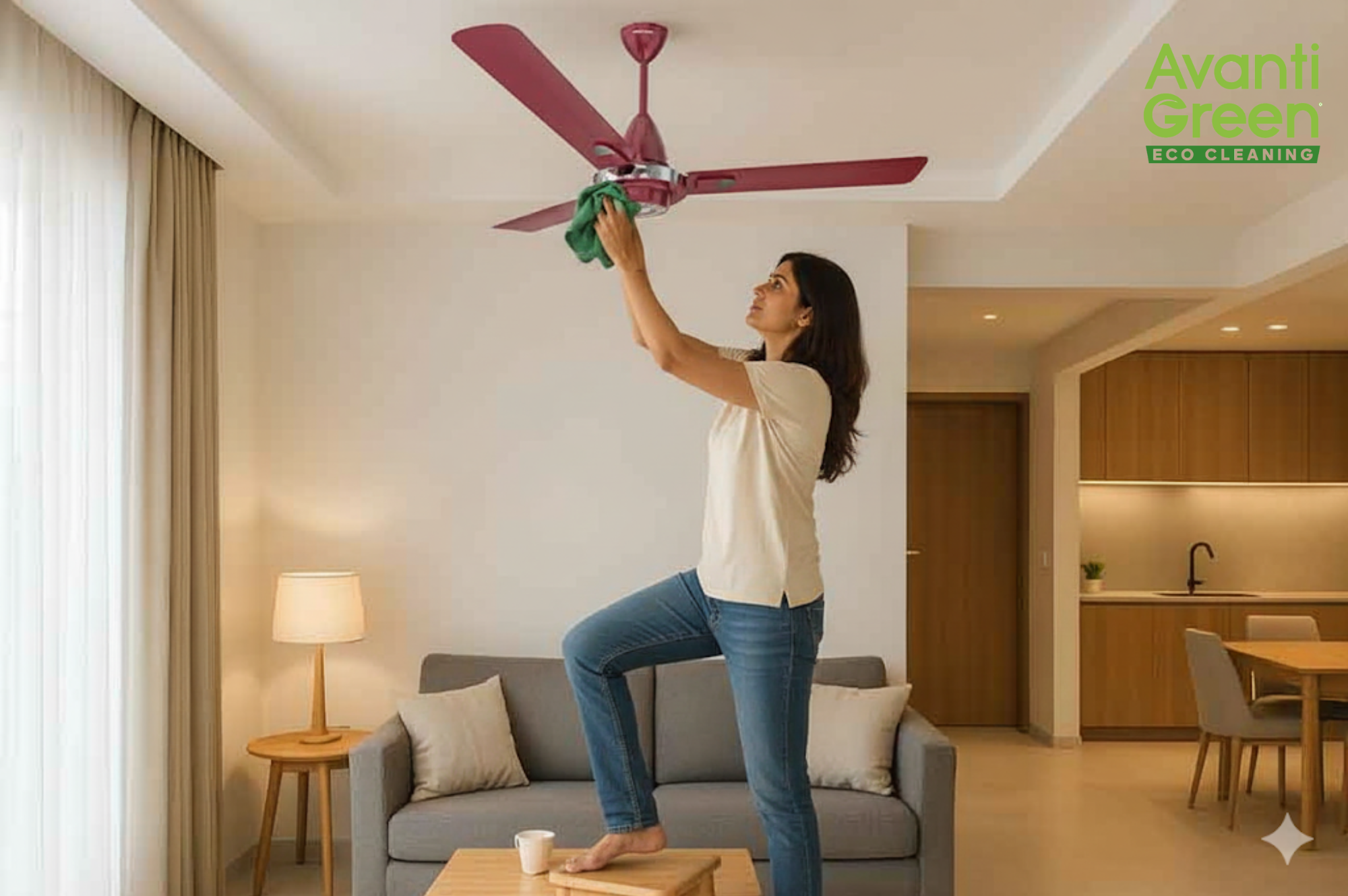
For ceiling fans, slide a pillowcase over each blade and gently pull it back to trap dust inside.
For box or pedestal fans, use a vacuum with a brush attachment to remove loose dust from grills and blades.
Step 3: Disassemble Where Possible
If the fan has removable grills, covers, or blades, carefully remove them according to the manufacturer’s design. Only remove parts meant to be detached easily.
Step 4: Wash Removable Parts
Soak removable components in warm water with a few drops of dish soap. For greasy kitchen fans, add a mild degreaser. Let soak for 10–15 minutes, then gently scrub, rinse thoroughly, and allow to dry completely.
Step 5: Clean Non-Removable Components
Using a lightly damp microfiber cloth, wipe blades, motor housing, and accessible interior surfaces. Use a toothbrush for vents and crevices. Avoid letting water drip into electrical components.
Step 6: Detail the Fan Housing
Wipe down pull chains, switches, vents, and exterior housing — areas often missed during routine cleaning.
Step 7: Dry Thoroughly
Ensure all components are fully dry before reassembly to prevent rust, warping, or electrical issues.
Step 8: Reassemble and Test
Reattach parts securely, restore power, and run the fan briefly to ensure smooth operation.
Common Fan Cleaning Mistakes to Avoid
- Using excessive water near motors or wiring
- Forgetting to turn off the power
- Skipping the drying step
- Using abrasive cleaners that damage finishes
- Ignoring vents and housings
Avoid shortcuts to protect both your health and your equipment.
Tips to Keep Fans Cleaner Longer
- Lightly dust fan blades during routine cleaning
- Use air purifiers to reduce airborne particles
- Replace HVAC filters regularly
- Clean fans before vacuuming or mopping to prevent dust resettling
Small habits can significantly extend the time between deep cleans.
When Should You Call a Professional Cleaner?
Some fans are difficult or unsafe to clean — especially high ceilings, older exhaust systems, or fans heavily soiled after renovations or move-outs. Professional cleaning services can safely clean fans as part of a comprehensive deep cleaning, saving time and reducing risk.
Conclusion
Deep cleaning fans may seem minor, but they have a major impact on indoor air quality and overall cleanliness. With a consistent cleaning routine, your fans will circulate clean air instead of dust — helping your home feel fresher, healthier, and more comfortable.
For professional deep cleaning using eco-friendly products and proven methods, the Avanti Green team is here to help.